The Rapid Mill Precision Ecosystem: When Five Tools Work as One
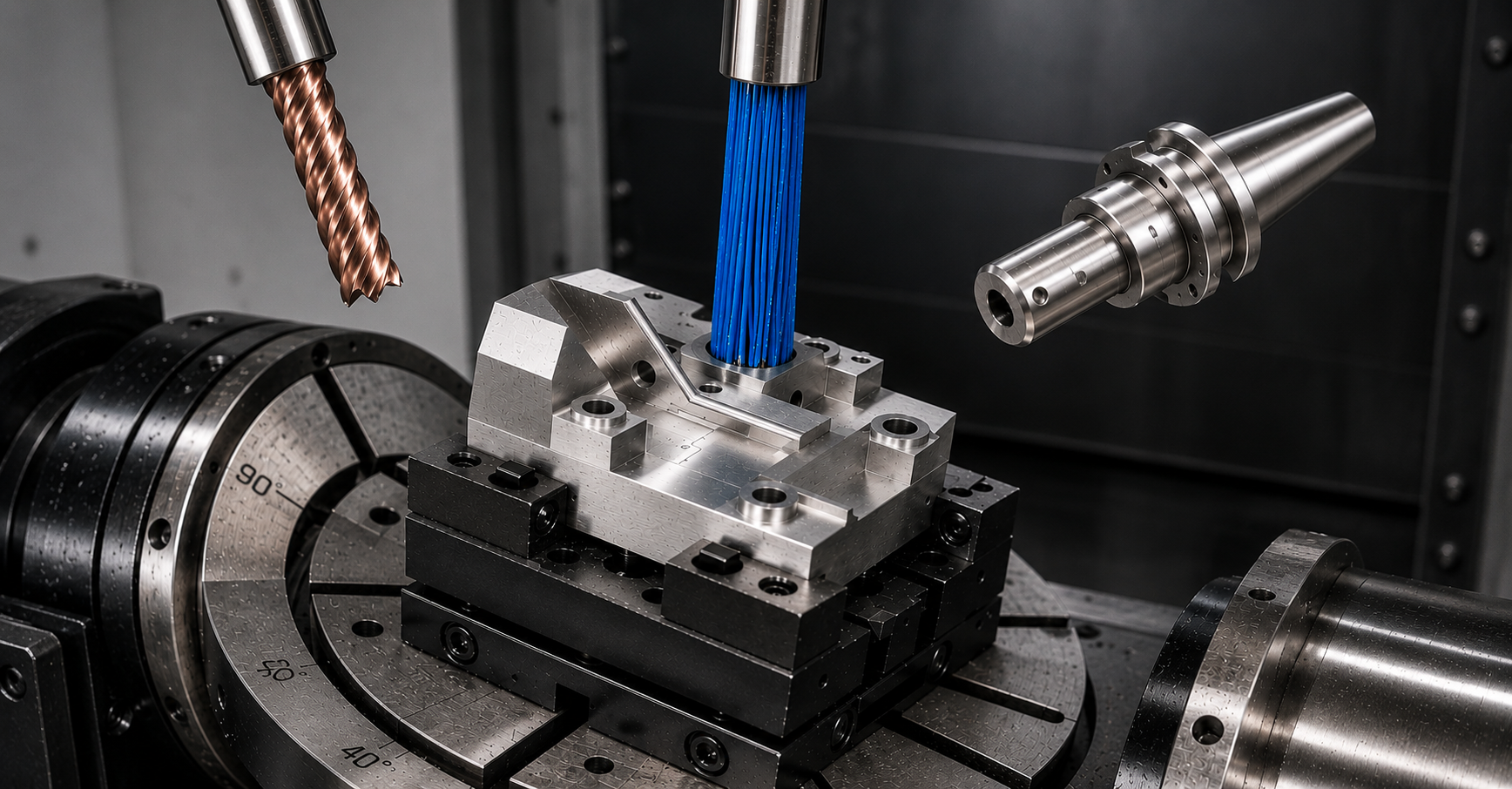
Most precision shops didn't build their tooling stack all at once. They built it purchase by purchase — the vise that was available, the holder that was in stock, the cutter that worked last time. The result is a process that technically functions but quietly costs: runout that nobody tracked, setup time that nobody questioned, burrs that get hand-filed before inspection because the alternative is false rejects.
An integrated tooling system starts from a different question: what does each step in the process need from the step before it?
Setup & Stability: 5th Axis V562X
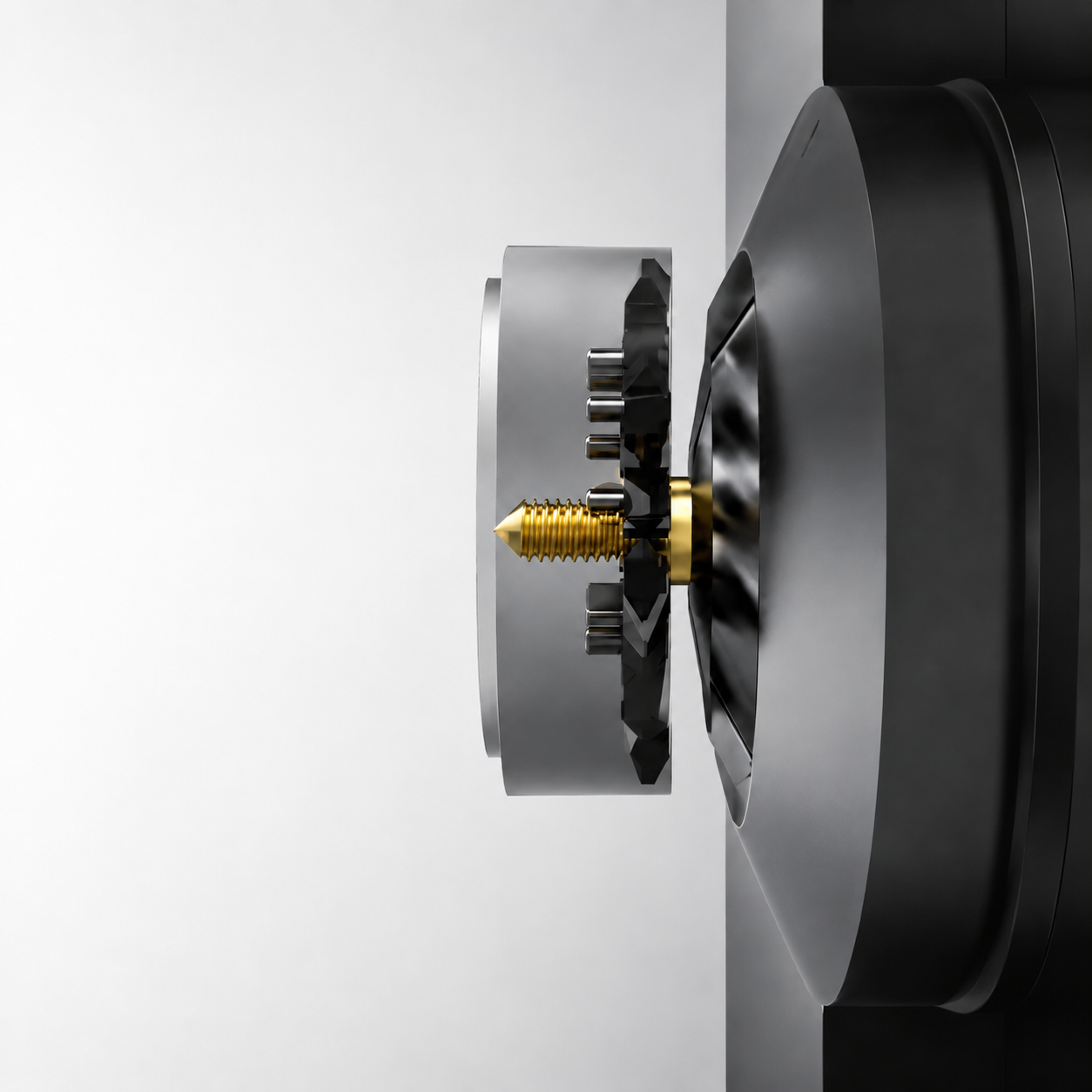
The 5th Axis V562X Self-Centering CNC Machine Vise is the starting point because it determines every tolerance downstream. Repeatability better than ±0.0005" means the second part runs from the same datum as the first. The RockLock™-compatible design supports fast changeovers without re-indicating. The 4-bolt jaw mounting system delivers 25 kN of clamping force with reduced jaw deflection — the kind of rigidity that matters in stainless and titanium applications where cutting forces are high.
Toolholding: GS Tooling by Sowa Dual Contact CAT40
GS Tooling by Sowa's Dual Contact CAT40 End Mill Holder puts the cutter at the spindle with 0.0002" TIR and premium balance to 30,000 RPM. The 4-inch projection provides reach to deep features without spindle interference, and the through-coolant system supports the chip evacuation demands of five-flute toolpaths in high-temperature alloys. Every holder ships with a calibration certificate — a small thing that matters a lot when a shop is tracking process variables.
Material Removal: PFERD TOOLS HCD5M (SCT Line)
PFERD TOOLS developed the HCD5M specifically for materials that resist conventional cutting: austenitic stainless, duplex, titanium. The five-flute geometry with variable pitch and variable helix disrupts the engagement patterns that cause chatter. The chip divider ensures controlled chip lengths even in deep pocket applications. The coating provides the thermal barrier titanium demands.
Paired with the GS Tooling by Sowa holder's documented runout, the cutter operates at the geometry it was engineered for — not at some degraded performance level the holder subtracted from it.
Surface Conditioning: ESS Contact Brush
The ESS Contact™ Brush uses ceramic abrasive filaments that maintain a consistent cutting geometry under tool pressure. This allows deburring to be programmed as a repeatable milling operation rather than a manual step. The ceramic fibers fracture burrs at the root rather than folding them flat — a distinction that matters at the next step in the process.
Optical Verification: INSIZE ISP-A5000E Profile Projector
The INSIZE ISP-A5000E closes the arc. With 10x standard magnification, a built-in edge detector, 0.5µm stage resolution, and ±0.08% magnification accuracy, it produces reliable Go/No-Go data on parts that have already been conditioned by the ESS brush. Clean edges read clearly. Measurement results export to Excel and CAD via USB, providing a documented quality trail for each batch.
The Result
When each tool in the stack is selected to support the next, the math changes. Fewer bad setups. Fewer rejected parts at inspection. Less time between the first part and the last one that looks like it. That's not a product claim — it's the logic of a coordinated system.
Factory Link represents all five of these brands. Contact us at to talk through your application.