
Every shop has its monsters. Most of them don't crash through the door. They creep in slowly, one workaround at a time, until they're draining hours, tools, and profits from the schedule.
These five stories are real. They happened on real shop floors. And every one of them got laid to rest.
Chapter 1: The Graveyard of Homemade Tombstones
Every shop has a graveyard. This one had a whole cemetery.
Walk the floor and every machine had its own tombstone, each one built in-house and each one different. Different parts, different setups, different rituals depending on which machine you stood in front of. It worked. But every changeover meant digging up a new setup, and every operator had to learn the quirks of every stone.
Shops don't end up here through bad decisions. They end up here one smart fix at a time, until the fixes outnumber the system.
The exorcism: standardization.
We worked with the shop to bring every machine onto the same platform: 5th Axis fully integrated RockLock™ tombstones. For their large parts, pull studs thread directly into the parts themselves, so the workpiece locks straight into the quick-change system with no fixture lurking in between.
The real magic is what happened next. Because RockLock™ runs on industry-standard 96mm pull stud spacing, the same tombstones that hold big parts can summon any vise in the 5th Axis lineup when smaller work creeps through the door. One platform, every part size.
The savings show up where downtime used to haunt the schedule. No more terrifying changeovers or spindles sitting dark while someone Frankensteins a one-off fixture. Fewer custom fixtures to build and store, setups that look the same on every machine, and any operator can walk up to any machine and know exactly what they're looking at.
Modular workholding doesn't just hold parts. It puts the ghosts of a hundred custom setups to rest.
The solution: 5th Axis RockLock™ integrated tombstones and 5th Axis vises
Chapter 2: The Block That Devoured End Mills
A 6x6 block of Inconel sat in a standard milling vise. It looked harmless. It was not.
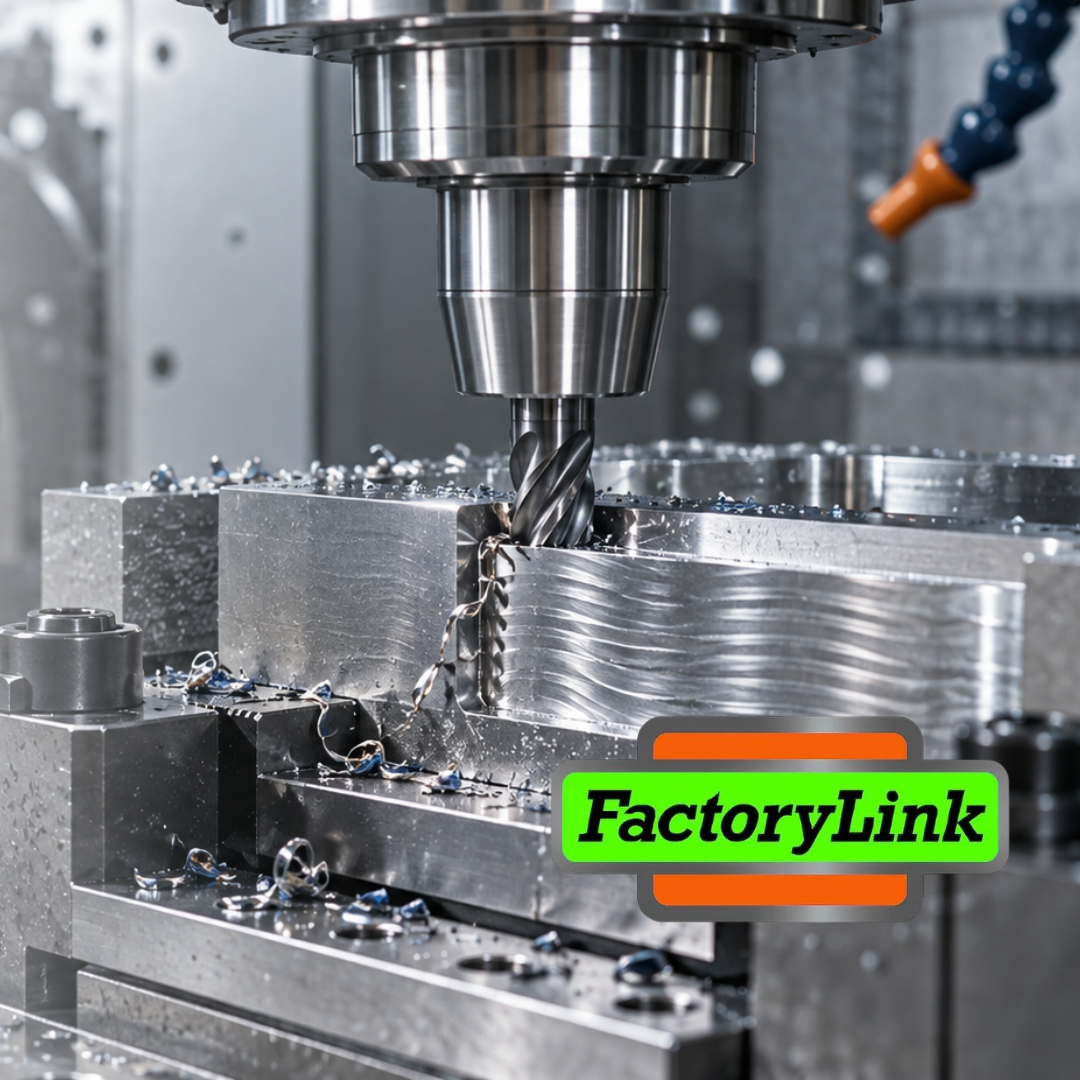
Inconel is a heat-resistant superalloy, and it fights back. It holds heat at the cutting edge, work-hardens as you cut, and feeds on tools that weren't built for it. The shop was running general-purpose end mills, and tool life was a nightmare. Tools went in. They came out as corpses.
A general-purpose tool isn't a bad tool. It's just a tool built for everything, and Inconel punishes anything that isn't built for it specifically.
The exorcism: armor built for the monster.
We brought in a high-performance end mill with an AlCrN (aluminum chromium nitride) coating. AlCrN is forged for the hellish heat that superalloys throw off; it holds up at temperatures where general coatings burn away. That matters in Inconel, where heat is the thing killing your tool.
We paired those end mills with GS Tooling by Sowa holders, because in this material the holder matters just as much as the tool. Any runout or instability at the spindle comes back to haunt the cutting edge, and in Inconel that shows up as chipped edges and early tool deaths. A rigid, accurate holder is what lets a premium tool live the life it was designed for.
The result: speed doubled, and tool life doubled. More parts per hour, and fewer tools sacrificed at the altar to get there.
The solution: PFERD TOOLS AlCrN-coated solid carbide end mills and GS Tooling by Sowa holders
Chapter 3: The 40-Hour Curse
Some parts haunt a machine. This one moved in.
The shop was producing Inconel vane rings, grinding them from rough all the way to finish. Every single part took 40 hours. That's not a cycle time. That's a curse.
Grinding is precise, and nobody questions that it belongs on the finish. But grinding is a slow, grueling way to remove a lot of material, and this part had plenty to remove.
The exorcism: ceramics.
We moved the roughing and semi-finishing off the grinders and onto a lathe using SiAlON ceramic RNG45 inserts. Ceramics thrive in the inferno where carbide wilts: they run at high surface speeds in heat-resistant alloys, and SiAlON in particular is known for toughness.
That toughness got tested. The cut on these vane rings was heavily interrupted, the kind of bone-rattling hammering that shatters tools. The inserts survived it with no issue.
With the rough and semi-finish done by turning, the grinders only had to do what grinders do best: the final finish pass.
30 hours of machine time were exorcised from every part. At a $120 shop rate, that's $3,600 back per vane ring, and the savings climbed into the millions.
The solution: Palbit SiAlON ceramic turning inserts
Chapter 4: The Pile That Wouldn't Stop Growing
In the back of the shop, something was growing.
A pump manufacturer was turning and milling Inconel-clad parts, then sending them to a manual deburr cell. The turning and milling departments were doing their job. The problem was that they were doing it faster than any human with a hand tool could keep up. Parts stacked up in deburr like bodies in a crypt. Then they stacked higher.
The bottleneck wasn't the people. It was physics: hand deburring can only go so fast, and the machines upstream didn't slow down to wait.
The exorcism: deburr where the part already lives.
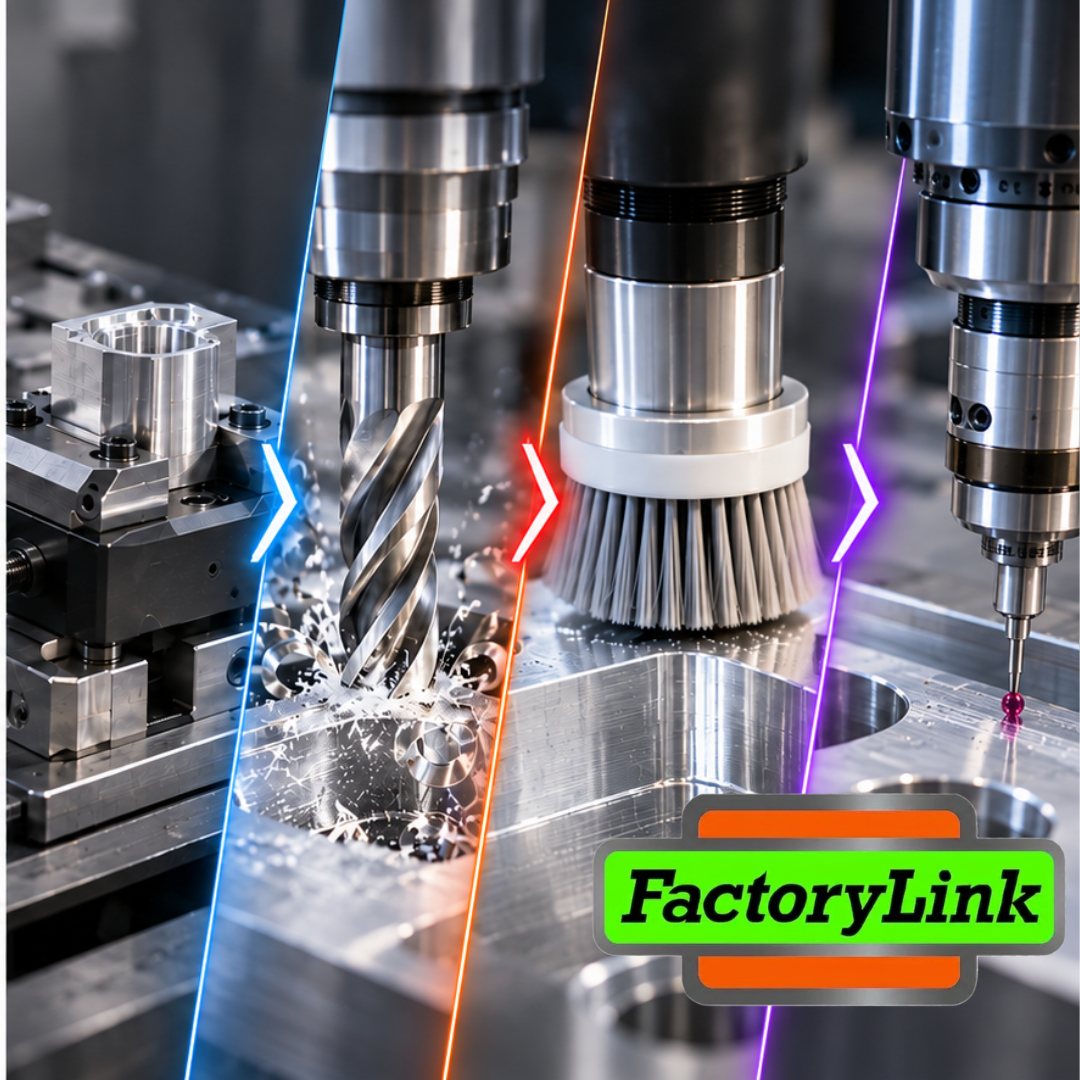
We brought in the ESS Contact series for in-machine deburring of the easily accessible features. Here's the part that spooked the shop: they didn't rewrite a single program. They ran the deburring tool along their existing end mill tool paths at a .012" depth of cut.
That took 60% of the workload off the manual deburr department. The pile stopped growing. The bottleneck was laid to rest.
The remaining features still needed human hands, so we upgraded what those hands were holding. PFERD mounted points built for heat-resistant superalloys gave the deburr team better weapons against a tougher material, and better tools mean a better finished part.
The solution: ESS Contact series and PFERD TOOLS mounted points for HRSA materials
Chapter 5: The Finish That Wouldn't Come Clean
Aluminum medical parts. A surface finish Ra callout on the print. And a finish that refused to be exorcised.
In medical work, the finish isn't cosmetic. It's a spec, and a part that misses it is a part that's dead on arrival.
The exorcism: a polishing pass in the machine.
We added the ESS Mirror brush as a finish pass right after the milling op. No secondary operation, no parts wandering to another station. The parameters:
- 3,000 RPM
- 80 IPM feed rate
- .010" depth of cut
The result: a 12 Ra finish.
And when you're hunting a number on a print, you need proof you caught it. We verified the finish with an INSIZE profilometer, turning "it looks good" into a measured surface roughness value the shop could document and stand behind, no ghost stories required.
The solution: ESS Mirror brush and INSIZE profilometer
Every Monster Has a Weakness
None of these shops were doing anything wrong. They were running hard, solving problems as they came, and doing what had always worked. That's how the quiet monsters get in.
Sometimes the fix is a new tool. Sometimes it's moving a process to where it's strongest. Either way, it starts with someone walking the floor and asking what's really going on.
If something's haunting your shop floor and you can't figure out what, call us. We'll figure it out. 👻
/ Want this on your floor?
Let's run it on your toughest part.
Free, on-site demo across MI, OH, IN, KY, IL, PA, WV.