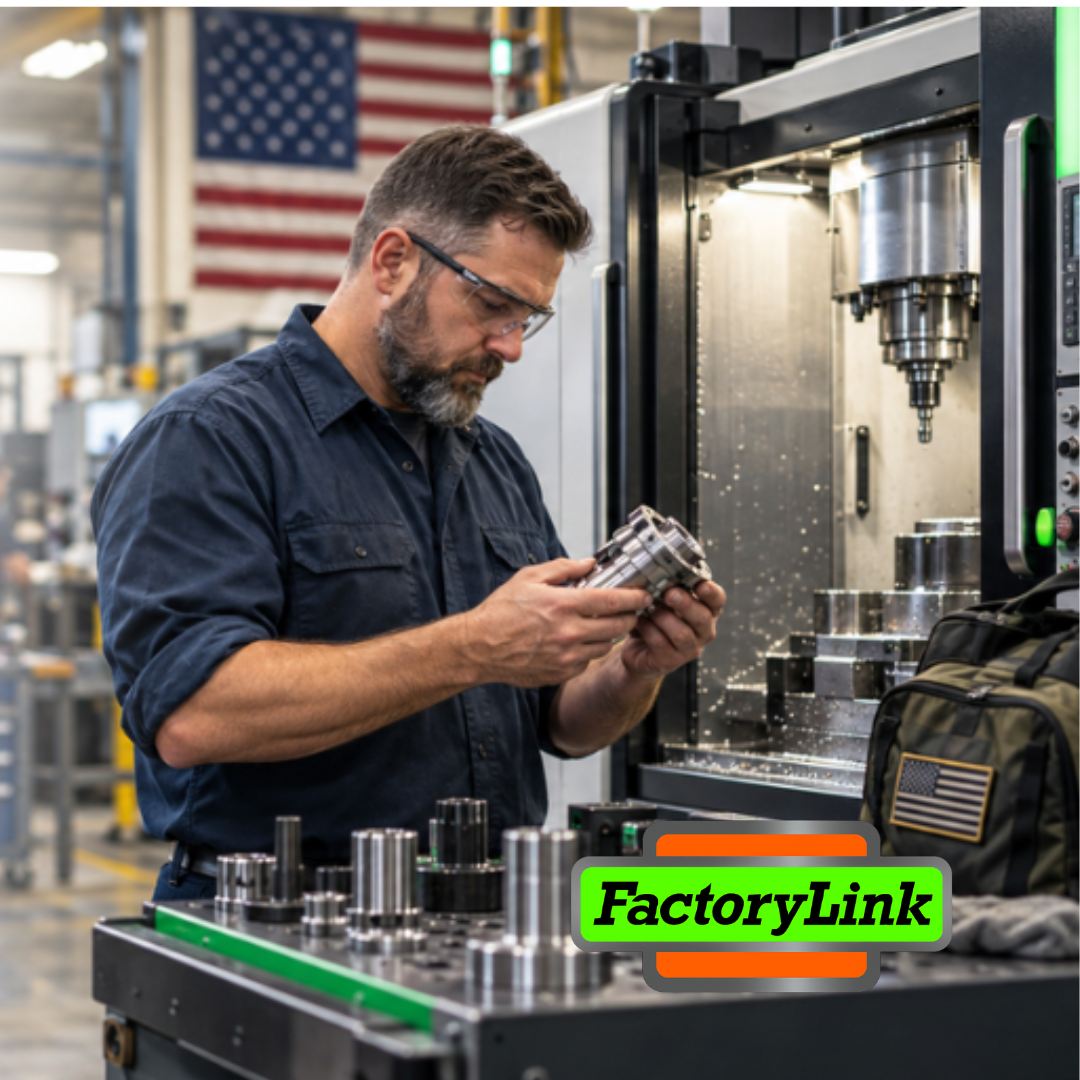
Somewhere in the Midwest right now, a veteran is standing at a machine. Maybe they learned to read a technical manual in a motor pool. Maybe they kept a radio network running on a mountainside, or kept aircraft flying off a carrier deck. Today, they're holding a tolerance most people couldn't see.
They once took an oath to serve something bigger than themselves. When the uniform came off, many of them found that same sense of purpose on the shop floor, building the parts, machines, and products this country runs on.
That's not a coincidence. It's a partnership, and it works both ways. Veterans make manufacturing stronger. And manufacturing has opened its doors to veterans wider than almost any other industry.
How Veterans Make Manufacturing Stronger
Hiring veterans isn't a favor. It's an advantage, and the numbers back it up. In 2021, about 12% of employed veterans worked in manufacturing, compared to roughly 9% of non-veterans, according to BLS data reported by Military Times. Manufacturers employ more veterans than any other private industry.
And veterans stay. Research cited by the Manufacturing Institute shows veterans remain with their first employer 8.3% longer than nonveterans and are 39% more likely to be promoted early. For a shop fighting turnover and a skills gap, that means people who stay and people who grow into leaders.
Manufacturers see it firsthand. In the Manufacturing Institute's 2024 report, manufacturing leaders overwhelmingly described military talent as disciplined and process-oriented, with strong leadership, technical skills, and work ethic. On the floor, those traits show up in setups, uptime, and quality:
Procedure discipline → consistent setups. Military work runs on technical manuals and checklists. On the floor, that becomes setup sheets, work instructions, and inspection plans followed the same way every time.
A maintenance mindset → more uptime. Many service members spent years keeping vehicles, aircraft, and equipment ready. That preventive habit catches the worn component before it becomes a crashed spindle.
Calm under pressure → faster recovery. When a machine goes down mid-run, the person who stays level and works the problem gets the cell back up sooner.
Training others → shorter ramp-up. The military trains people constantly, and veterans tend to pass knowledge on the same way: patiently, completely, and by the book.
Accountability → fewer escapes. Owning the result, including the bad part, is how quality problems get caught at the machine instead of at the customer.
Teamwork across shifts → cleaner handoffs. Units run on clear communication between people who rotate in and out. So does a two- or three-shift shop.
Why Manufacturing Is Veteran-Friendly
The respect runs the other way too. Manufacturers know what veterans bring, and many have built real on-ramps so no one who served has to start from zero.
SkillBridge internships. In their last 180 days of service, transitioning service members can intern with a civilian employer while the military keeps paying them. Manufacturers use it to evaluate and train future hires before day one. General Dynamics Land Systems in Sterling Heights, Michigan is one of the approved partners offering manufacturing placements.
Heroes MAKE America. The Manufacturing Institute's program is an approved SkillBridge that trains service members, veterans, Guard members, reservists, and military spouses for manufacturing careers at no cost to participants. Training includes industry certifications such as Certified Production Technician, OSHA 10, and forklift operation.
GI Bill apprenticeships and on-the-job training. Machinist and tool and die maker are among the trades approved for GI Bill apprenticeships. Veterans earn their wage plus a tax-free monthly stipend, and the shop gets a trained, committed employee.
State veteran-friendly employer programs. Michigan's Veterans Affairs Agency recognizes employers at Gold, Silver, and Bronze levels for veteran recruitment, training, and retention. Gold status requires retaining at least 75% of veteran hires over 12 months. Nearly 200 Michigan employers participate.
One change worth knowing: the federal Work Opportunity Tax Credit, long a hiring incentive for veterans, lapsed for hires starting after December 31, 2025, and had not been renewed as of mid-2026. Check its status before counting on it.
The Result
Shops get people who already know what it means to have others counting on them. Veterans get a place where that still matters: a team, a mission, and a craft that can grow with them into programming, quality, and leadership. Both sides come out stronger.
Bottom Line
Service doesn't end when the uniform comes off. It changes shape. It becomes the first article inspected right, the new hire trained the right way, the line that keeps running because someone refused to let it stop. Walk enough Midwest shop floors and you'll meet the people doing it.
If you run a shop and want to build that kind of team, SkillBridge, Heroes MAKE America, GI Bill apprenticeships, and your state's veteran agency are good places to start.
To every veteran keeping Midwest manufacturing moving: thank you. You served in uniform. You serve every day on the floor.
/ Want this on your floor?
Let's run it on your toughest part.
Free, on-site demo across MI, OH, IN, KY, IL, PA, WV.