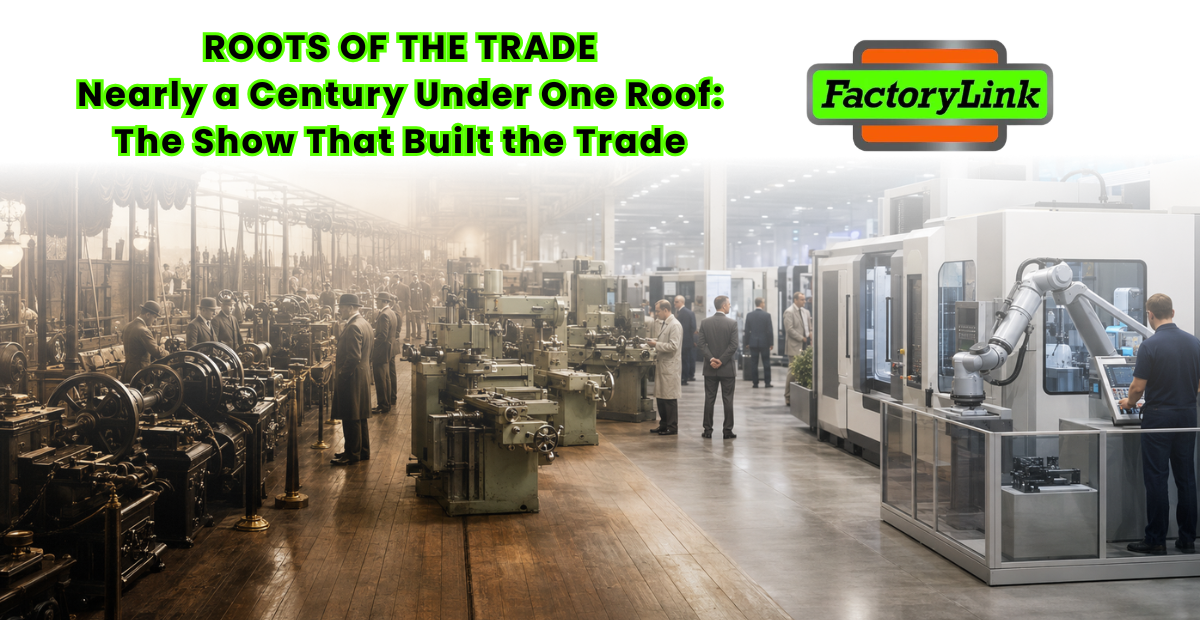
Nearly a Century Under One Roof: The Show That Built the Trade
Keith Brown • August 14, 2026

Every trade has a place where it goes to see itself clearly. For manufacturing technology, that place has a name and a schedule: the International Manufacturing Technology Show, back at McCormick Place this September for the first time since 2024. Walk the floor and it feels like the future arrived early. But the show is older than almost everyone standing in it — and its story is really the story of the trade itself.


It started as a place to show what the work could do

In September 1927, the first National Machine Tool Builders' Exposition opened in the Cleveland Auditorium. It filled 63,000 square feet and drew more than 12,000 people to see 428 operating machines — everything from milling machines weighing 100,000 pounds down to portable electric drills. The floor demanded more electrical power than any single-industry exposition had ever needed; organizers built a dedicated transformer station rated for 5,000 horsepower just to keep the machines running.

Here's the part worth sitting with: the machines weren't for sale. The first show wasn't a marketplace. It was closer to a science fair — a place for the trade to put its capability on the table and let the industry see what was possible. That instinct, showing the work rather than just pitching it, is still the best reason to walk the floor today.


It survived the years that should have ended it

The show has always been a mirror of the wider economy, which means it has lived through the economy's worst stretches. The 1935 exhibition arrived only after the Great Depression forced two postponements. It went on anyway, and the organizers took visible pride in persevering through a time of doubt. After that, the Second World War shut the show down entirely — no exhibitions for over a decade.

When it came back in 1947, it came back big. The first postwar show leased 500,000 square feet inside the old Dodge plant on South Cicero Avenue in Chicago — the building Tucker was taking over — and it turned loose a wave of manufacturing capability that the war years had built up behind closed doors. A show that had been dark for twelve years reopened as the launch pad for the postwar industrial boom.


It's where the trade met the machine that changed everything

Numerical control didn't arrive with fanfare. A few numerically controlled machines quietly caught visitors' attention at the 1955 show. But by 1960, NC wasn't a curiosity anymore — it was the center of gravity. Observers at the time openly called it 'the numerical-control show.' The idea was radical and simple at once: take the principle of the electronic computer, code instructions as numbers on punched or magnetic tape, and let servo-mechanisms move the machine. This is the ancestor of every CNC control on your floor right now.

It's tempting to call 1960 the death of manual machining. It wasn't. It was the beginning of a partnership — the operator's judgment paired with the machine's repeatability — that still defines precision work today. The machine didn't replace the machinist. It gave the machinist a new instrument to be good with.


It's where the trade tests ideas — including the ones that don't survive

Not every breakthrough on the floor becomes the future. In 1994, Giddings & Lewis unveiled the Variax, a six-legged hexapod mill that reimagined machine geometry from the ground up. It was one of the most talked-about exhibits in the show's history — fast, precise enough to double as a coordinate measuring machine, genuinely ahead of its time. And it didn't catch on. It was expensive and complicated, and the industry moved on.

A trade needs a place to try the audacious idea in public, and to decide together what's worth keeping. The Variax is remembered because the floor is where the industry does its thinking out loud.


It's where a car drove off the floor that was never assembled from parts

In 2014, Local Motors, Cincinnati Incorporated, and Oak Ridge National Laboratory printed a functional electric car — the Strati — live on the show floor. The carbon-fiber-reinforced body came off a Big Area Additive Manufacturing machine in about 44 hours, got finished on a CNC router, was assembled in two days, and drove off the Emerging Technology stand before the show closed, to a cheering crowd. AMT described it as returning the show to its roots as the place where the newest technology is seen first.

Notice what that build actually was: additive and subtractive working together. The 3D printer made the shape; the CNC router made it right. The newest tool on the floor didn't retire the older one. It partnered with it. That's the whole story of this trade, compressed into one 44-hour build.


Which brings us to this September

From a 1927 science fair in Cleveland to a car printed live in Chicago, the through-line never changed: the machine never ran itself. Every milestone on that floor was a new instrument in capable hands. That's the trade we work in, and that's why we show up.

Next month, FactoryLink joins that lineage as joining that lineage as proud representatives of the many brands we represent.  Many of the principals we represent will be on the floor with us — the same builders, tooling makers, and technology partners whose work we put in front of shops every day. If you're planning your walk through McCormick Place September 14–19, put us on the list. We'd rather show you what the work can do than tell you about it. That's been the point since 1927.
By Keith Brown August 7, 2026
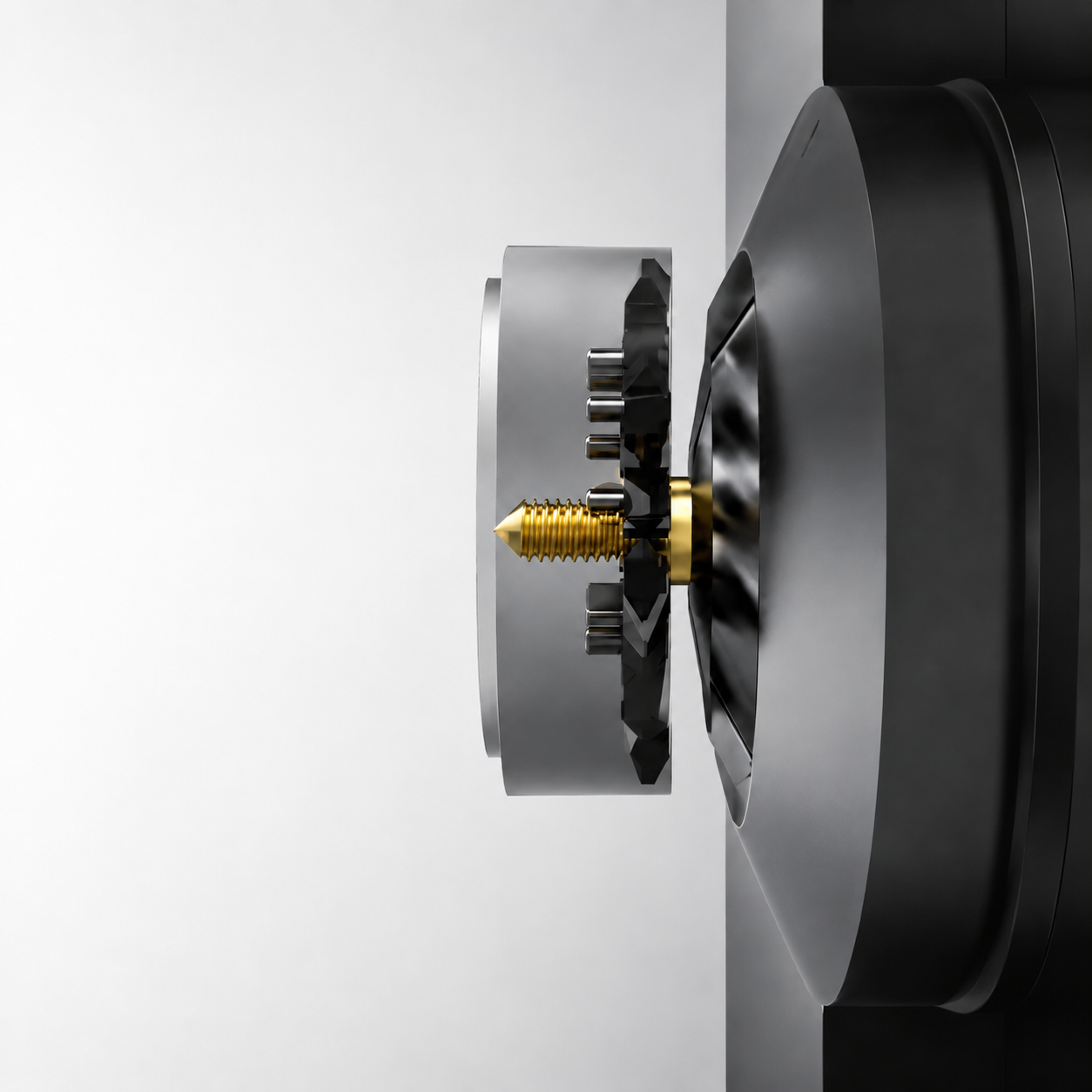
Ask anyone who runs bone screws, dental implants, or long aerospace fasteners on a Swiss machine what keeps them up at night, and thread quality on small-diameter parts is near the top of the list. The longer and thinner the part, the harder it fights back. THE PROBLEM Single-point threading works away from the part’s support. On a long length-to-diameter part — think a titanium bone screw many times longer than it is wide — the cutting force pushes against material that has room to flex. The bar deflects, and that deflection shows up as taper down the length, inconsistent thread form, and surface finish that breaks down toward the unsupported end. Because single-point threading builds the thread over multiple passes, every pass is another chance for variation to creep in, and every pass adds cycle time. In medical and aerospace work, where the thread form is often deep, increased-pitch, or multi-start, that’s not a cosmetic issue — it’s a scrap-rate issue. THE FIXES — WHAT YOU CAN TRY FIRST Before changing your whole approach, there’s real ground to gain by tightening up the process you already run. These fixes cost time and attention rather than capital: Workholding and support. Keep material support as close to the cut as possible — extended-nose guide bushings hold the bar within millimeters of the cutting point. Re-check and tighten rotary or sliding guide bushing clearance; loose clearance lets the bar push away under radial threading loads. And where the geometry allows, pre-turn the major diameter close to tolerance in a supported pass before the thread tool engages. Tooling. Move to sharp, polished, positive-geometry ground inserts rather than molded or dulled edges — a keener edge cuts cleaner and pushes less. Tough PVD-coated micro-grain carbide grades hold up to the low-to-medium surface speeds these materials demand without chipping. And an angled flank infeed, rather than a straight radial plunge, loads the cut primarily on one edge and reduces the side-pressure driving deflection. Programming. If your control supports it, apply spindle speed variation — modulating RPM by 10–20% during the cut breaks up the regenerative chatter frequency before it builds. Where the setup allows, a reverse pull-turning configuration converts radial push forces into axial tension, which stabilizes a small-diameter profile instead of bowing it. THE CEILING Here’s the honest part: these fixes help, but they manage the symptom rather than remove the cause. On a genuinely long, small-diameter threaded part, single-point threading is still working away from support and still building the form over multiple passes. There’s a point where you’ve dialed in everything you can and the process itself is the limit. THE FIX: GENSWISS® THREAD WHIRLING That’s where thread whirling changes the equation entirely. At FactoryLink Inc., we support thread whirling solutions from GenSwiss®. Instead of cutting away from support, a whirling system uses a rotating ring of inserts working right at the guide bushing — where the part is fully supported — and cuts the thread in a single pass from stock diameter. The deflection problem largely disappears because the cutting happens where the part is held, not out at the unsupported end. The advantages compound from there. Because whirling inserts get their side clearance from the tilt of the whirling spindle rather than from relieving material under the edge, they carry a stronger cutting edge and longer tool life than single-point tools. The single-pass approach eliminates the rough-and-finish insert matching that single-point threading requires, cutting setup and debugging time along with special support devices. And the finish itself is better: because the cutter enters and exits in a radial arc and contacts the part only at full tangency, whirling leaves a uniform surface — a real advantage on the 0° thread walls common on the trailing side of bone screws. GenSwiss builds this on a partnership with Utilis AG of Switzerland, putting more cutting teeth in the cut — up to twelve inserts, versus the three- and six-insert systems that came before — so a shop can run higher speeds and feeds while holding thread form. Their cutter rings, like the nine-pocket rings running double-lead custom-form inserts, are built around the exact demands of medical and aerospace threading. And where many whirling attachments run out of adjustment on multi-start threads, GenSwiss attachments adjust to ±25° of helix angle — enough range to handle the double- and triple-start threads that show up on modern implants and screws. THE PINNACLE: GENSWISS® TRUFORM® INSERTS If thread whirling is the fix, TruForm® is where it reaches its peak. GenSwiss® TruForm® triple-edge inserts are built for maximum precision in thread whirling — three cutting edges per insert, custom-ground to fit the most common three-sided whirling holders across whirling attachments and Swiss-CNC machines. Their sharper lead angles, matched to GenSwiss’s high-precision grind standards, produce burr-free threads, extended tool life, and a surface finish GenSwiss fairly calls jewelry-like. ThermoGuard and Aegis coatings keep the inserts running longer and support the high metal-removal rates that aggressive custom thread forms demand — the exact conditions found in bone screws, dental implants, worm gears, and semiconductor parts. For long, small-diameter threaded parts, that’s the full picture: cut at the guide bushing where the part is supported, put more teeth in the cut, match the helix to the thread, and finish it with an insert engineered for the peak of the process. That’s how a deflection fight becomes a repeatable, high-yield operation. Looking at a threaded part that won’t hold form on your Swiss machine? Reach out to FactoryLink Inc. to talk through whether GenSwiss® thread whirling with TruForm® inserts is the right fix for your application. For more information about how The Factory Link can improve your thread whirling workflow contact us!
By Keith Brown July 31, 2026
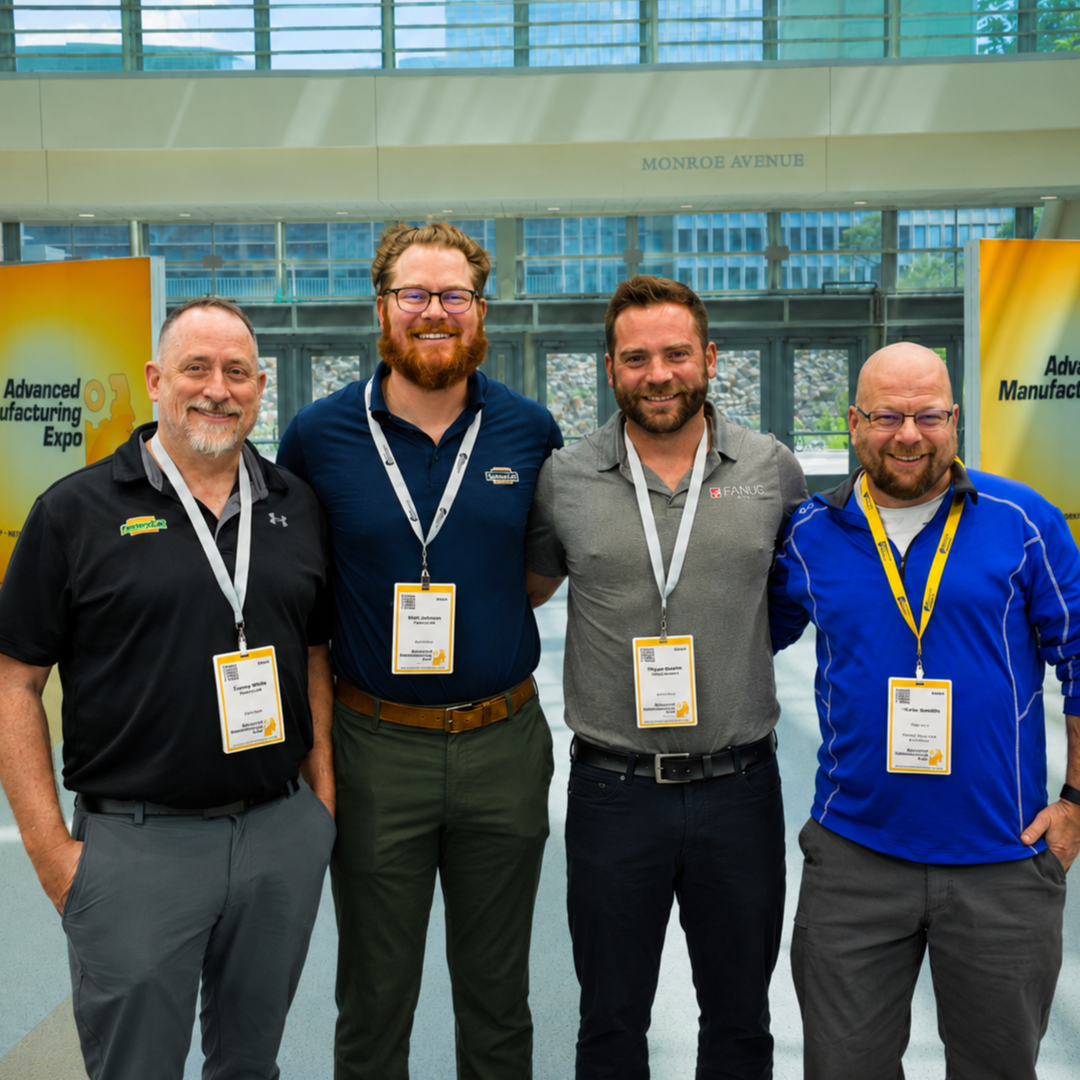
The Advanced Manufacturing Expo 2026 at DeVos Place was, by any measure, a strong show. The floor was full of genuine technical innovation — new automation platforms, smarter robotic cells, and a level of process integration that keeps raising the bar for what a modern shop can do. FactoryLink was there alongside several of our principals, including INSIZE and GS Tooling by Sowa. A few of our lines even brought brand-new products to the floor that we can't detail here just yet — more on those soon. But if there was one line that drew a crowd and held it, it was the ESS (Engineered Surface Solutions) ceramic brushes. ESS is one of only a handful of sources for high-quality ceramic brushing tools on the market. Relatively unknown even a short while ago, the brand has been steadily gaining traction with shops that have actually run the tools and seen the results — and it's a line we trust completely. At AME, that quiet momentum turned into real attention. Machinists who had never handled a ceramic brush walked away understanding why this category is different — and just as tellingly, people who had used ceramic brushes before left understanding why ESS brushes are a step apart. Engineered to Run Like Cutting Tools “ESS brushes are engineered to run like cutting tools,” says FactoryLink President Keith Brown — and that framing is the key to understanding the whole line. These aren't general-purpose deburring wheels you reach for and hope. Each ESS product is built for a specific function, with a defined filament, geometry, and operating window, the same way you'd select an end mill or a reamer for the job in front of you. That precision is exactly what makes them worth talking about. A few examples make the point: ESS Contact™ is a surface deburring and polishing brush built on ultra-fine ceramic-fiber filaments. It's the everyday workhorse of the line — effective burr removal and surface prep on CNC machines, robots, and automated finishing cells, without rounding edges or pulling unexpected material. Tight tolerances stay tight. ESS Bloom is the side-polishing specialist. Its uniform alumina-abrasive filaments cut consistently without gouging, clearing light burrs from side faces, threads, inner holes, and small edges while leaving a bright, near-mirror finish. Because the filaments are non-metallic, there's no folded metal or torn edge left behind — a real advantage on delicate features. ESS Flare™ goes where hand-deburring is miserable: deep bores, ports, valve bodies, and intersecting-hole passages. It delivers clean, burr-free cross-sections without altering bore size or shape, cutting down on secondary hand operations and the inspection headaches that come with them. ESS Mirror™ is the finishing pass. Where the others remove burrs, Mirror™ refines — high-density ultra-fine ceramic fiber that produces a uniform, high-gloss surface while preserving geometry and edge detail. Run it after a deburring brush and you get an automation-grade polish that used to require handwork. Line them up and the logic is obvious: there's a right tool for every stage of the finish, each one engineered for its job. That's not how most brushing products are sold — and it's exactly why they belong in the same conversation as cutting tools. Why FactoryLink, and Why AME Technical lines like ESS don't sell themselves off a spec sheet. They need someone who can talk through filament selection, speeds and feeds, and how the tool behaves in a real automated cell — which is precisely what FactoryLink is built to do. Handling genuinely technical products, and representing them to the people who run them, is our lane. And AME is the right room for it. It's where the technical minds of Midwest manufacturing gather to meet, explore, and dig into the details — the kind of venue where a tool that “runs like a cutting tool” gets evaluated by people who know exactly what that claim means. A product like ESS deserves that audience, and this year it got it. Next Stop: IMTS, Chicago AME was a strong start, but we're not done for the year. FactoryLink will be at IMTS — the International Manufacturing Technology Show — this fall, September 14–19, 2026, at McCormick Place in Chicago. It's the largest manufacturing technology show in the Western Hemisphere, and we'll be bringing the same lines, the same technical depth, and the same commitment to the products we stand behind. If AME was the preview, IMTS is the main stage. We'll see you there. To learn more about ESS Brushes and how they can help your workflow contact our technical service dept.
By Keith Brown July 25, 2026
Every week, shop owners in West Michigan get pitched something new. AI-driven analytics. Predictive maintenance. Digital twins. Cobots that program themselves. The promises are big and the language is dense, and for a shop running twelve people and a full order book, there's no clean way to tell what's real from what's a slide deck. That's the gap the Advanced Manufacturing Expo fills. AME exists because Michigan manufacturing doesn't need another abstraction layer. It needs to see equipment run. The show is built around that — halls organized by what you actually do, from metalworking and precision tooling to Industry 4.0 to maintenance and safety, with live demonstrations instead of brochures. Show organizers have been explicit that the goal is helping manufacturers filter a crowded software market down to what will hold up on a real floor. The location isn't incidental either. West Michigan carries one of the highest concentrations of manufacturing employment in the country — furniture, medical device, aerospace, automotive supply — and most of that work happens in tier-two and tier-three shops that don't have the budget to fly an engineering team to Chicago or Las Vegas on a maybe. DeVos Place puts the show inside a day's drive for a huge share of the Midwest supply base. That accessibility is the whole point. Then there's the labor question, which nobody in this industry needs explained. Skilled operators and toolmakers are hard to find and harder to keep. The technology worth paying attention to isn't the kind that promises to replace them. It's the kind that lets the people you already have hit tighter tolerances, change over faster, and spend less of the shift fighting the setup. That's the lens FactoryLink brings to the floor. We don't attend these shows to collect literature. We go because the tooling landscape moves faster than any line card can keep up with, and the only way to know what's worth representing is to see it run and ask hard questions of the people building it. Metrology that captures data without a manual entry step. Workholding that cuts changeover instead of adding a process. Cutting tools and finishing solutions matched to the material in front of you rather than the catalog. The question we keep coming back to is a simple one: does this make the operator's job better, or does it just make the pitch better?  AME 2026 runs July 29th and 30th at DeVos Place in Grand Rapids. We'll be exhibiting in booth 922 — not because we've got the operator's job figured out, but because making it better is the work, and that work doesn't stop. That's what this show is built for, and it's why we keep showing up. Come find us. The best conversations happen standing next to the machine.