FactoryLink Friday!

Keith Brown • April 4, 2025

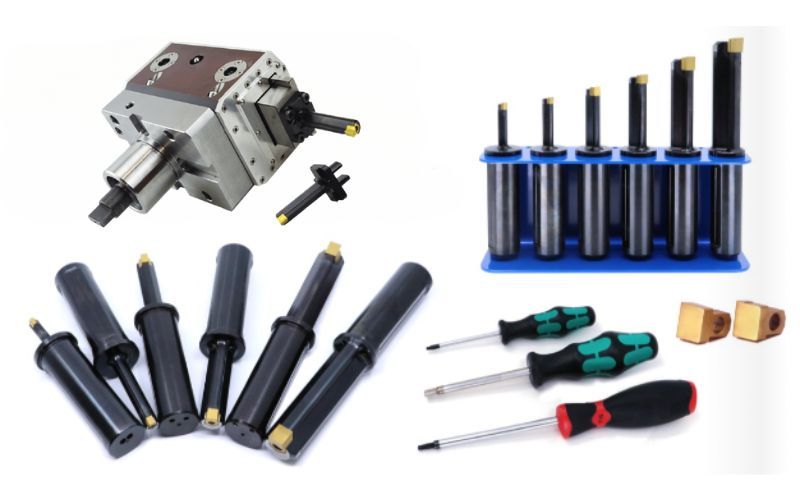
Pilot Precision Products - DuMont CNC

Dumont CNC Broaching: An Essential Machining Process and Why DuMont CNC Leads the Market


What Is Broaching?


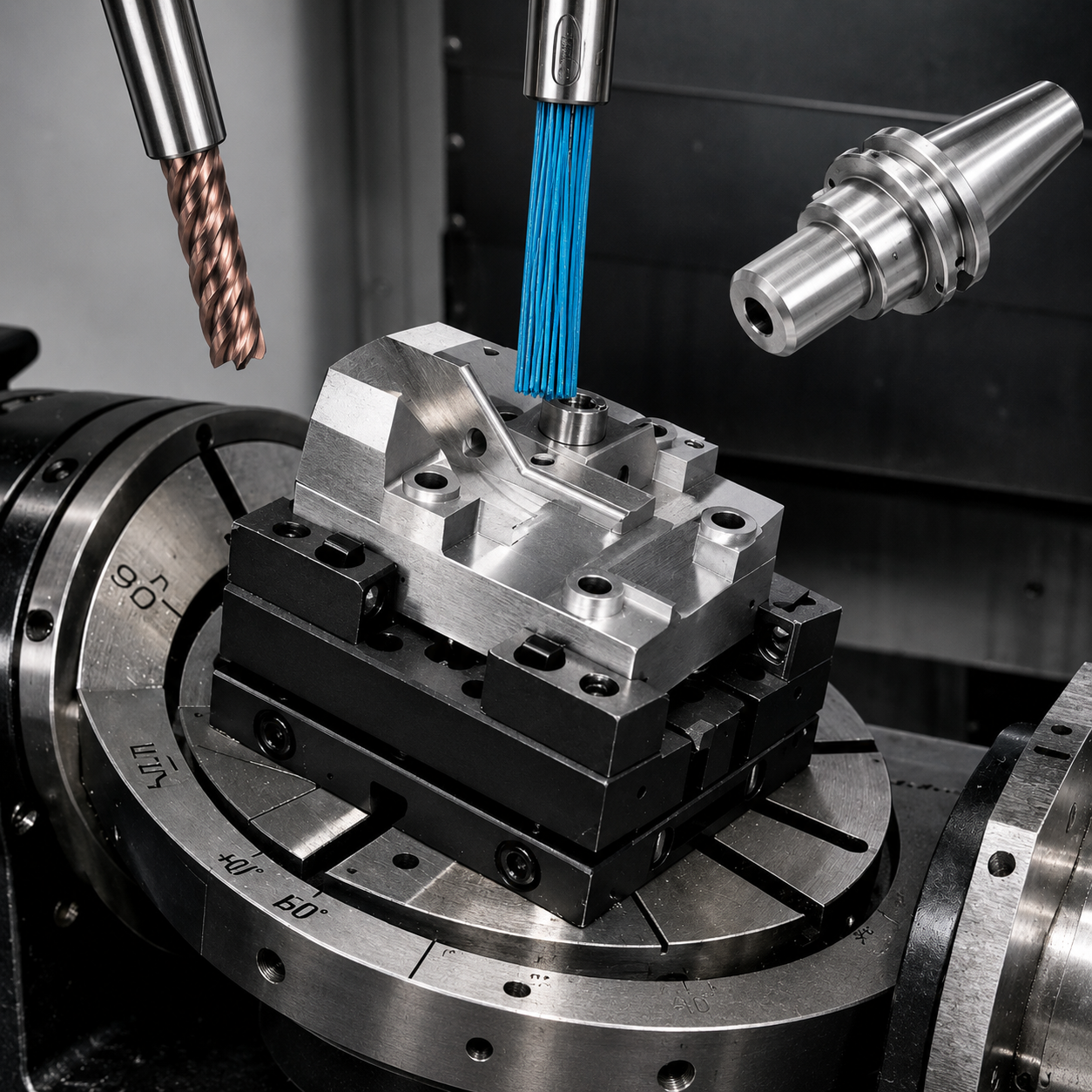
Broaching is a machining process that uses a toothed tool, called a broach, to remove material and create precise shapes in metal parts. It is widely used in industries such as automotive, aerospace, and manufacturing to produce keyways, splines, and other complex internal or external geometries. Broaching is known for its high efficiency, accuracy, and ability to produce excellent surface finishes in a single pass.


There are two primary types of broaching:

    1.    Linear Broaching – The broach moves in a straight line through the workpiece.

    2.    Rotary Broaching – The broach is rotated and pressed into the workpiece, commonly used for internal shapes like hexagons or squares in Swiss machining.


The Importance of High-Quality Broaching Tools


A successful broaching operation depends on precision-engineered tools. Poor-quality broaches wear out quickly, produce subpar finishes, and can lead to excessive machine downtime. This is where DuMont CNC stands out as the best choice in the industry.


Why DuMont CNC Is the Best Option for Broaching


DuMont CNC has established itself as the industry leader in broaching tools by offering unmatched quality, innovation, and reliability. Here’s why DuMont CNC is the top choice for manufacturers:


1. Superior Tooling Quality


DuMont CNC broaches are crafted from premium materials, ensuring durability and long tool life. Their tools maintain sharp cutting edges longer, reducing the need for frequent replacements and minimizing downtime.


2. Precision for High-Performance Machining


DuMont CNC’s broaching tools are designed for extreme accuracy, making them ideal for high-precision industries like aerospace and medical device manufacturing. Their rotary broaching solutions, in particular, allow for perfect internal shapes in Swiss machining applications.


3. Wide Range of Customization Options


Not all machining applications are the same. DuMont CNC offers custom broaching solutions tailored to specific geometries, tolerances, and material requirements. Whether a manufacturer needs standard keyway broaches or specialized rotary broaches, DuMont CNC can deliver.


4. Seamless Integration with CNC and Swiss Machining


Modern manufacturing relies heavily on CNC and Swiss-style lathes, where rotary broaching plays a key role. DuMont CNC’s tools are optimized for high-speed production, ensuring smooth, efficient operation without compromising accuracy.


5. Exceptional Customer Support and Engineering Expertise


DuMont CNC backs its products with outstanding technical support and engineering expertise. Their team assists with tool selection, setup, and troubleshooting, ensuring customers achieve the best possible performance from their broaching operations.


6. Cost-Effective and Long-Lasting Performance


Investing in high-quality broaching tools reduces overall manufacturing costs by increasing tool life, improving efficiency, and reducing scrap rates. DuMont CNC’s tools offer superior longevity, making them the most cost-effective choice in the long run.


Conclusion


When it comes to broaching, choosing the right tool supplier is critical for maintaining efficiency and precision. DuMont CNC stands out as the best option in the market due to its high-quality materials, precision engineering, customization options, and superior customer support. Manufacturers looking for reliable and efficient broaching solutions will find DuMont CNC to be the ultimate partner in achieving their machining goals.


If you’re in the Great Lakes region and looking for high-performance broaching tools, let’s connect to discuss how DuMont CNC can enhance your machining operations!
By Keith Brown March 20, 2026
Experienced operators know machining instability rarely starts at the cutting edge. It starts in the sump. Foam creeping into high-pressure lines. Heat building at the tool interface. Bacteria breaking down fluid integrity. Corrosion forming where it shouldn’t. When coolant chemistry falls out of balance, performance doesn’t collapse all at once — it slowly drifts. Tool life shortens. Surface finish changes. Operators compensate. Downtime increases. Cooling lubricants must simultaneously remove heat, provide boundary and extreme-pressure lubrication, flush chips, resist microbiological growth, prevent corrosion, control foam, and remain stable in both hard and soft water conditions. Cadillac Oil’s Microcool line is engineered to maintain that balance across materials, duty levels, and machine conditions. The Three Microcool Technologies Synthetic: - High thermal and oxidation stability - Rapid heat dissipation - Oil-rejecting, clean-running chemistry - Low misting and reduced smoke - Enhanced wetting agents for reduced carry-out - Transparent formulation for operator visibility Semi-Synthetic: - Balanced extreme pressure and boundary lubrication - Strong detergency and surface finish capability - Defoaming performance for low and high pressure systems - Extended sump life with microbiological protection - Stable in varying water hardness Soluble Oil: - Premium base oils with advanced emulsion packages - High lubricity for demanding applications - Bio-resistant components for sump longevity - Excellent corrosion protection - Stable emulsions in hard and soft water Why the Chemistry Matters Modern CNC systems operate at higher spindle speeds, feed rates, and often high-pressure coolant delivery. Coolant must maintain film strength under load, prevent thermal shock, control aeration, resist microbial breakdown, and maintain emulsion stability across water conditions. If any of those fail, the result is reduced tool life, inconsistent finishes, and reactive maintenance. Microcool fluids are formulated to maintain stability under those variables across extended production cycles. Industry Applications Automotive Manufacturing – Controls heat and foam under aggressive feeds and continuous production. Aerospace – Supports heat management and corrosion protection for tight-tolerance alloys. General & Heavy Industry – Maintains stability across mixed substrates and variable water quality. The Result With Microcool: - Tool life extends under load - Surface finishes remain consistent - Sump life increases - Waste streams decrease - Machines run cleaner Cutting tools remove material. Coolant chemistry protects the process.  Learn How Cadillac Oil Co. can optimise your machining
By Keith Brown March 13, 2026
And Why Other Industries Follow the Same Path
By Keith Brown March 6, 2026
Walk through any shop and you’ll hear a lot about tolerances, feeds, speeds, and tool life. You won’t always hear people talk about surface roughness — at least not until something fails. A seal leaks. A coating flakes. A bearing runs hot. A part that 'looked fine' doesn’t perform. Surface finish isn’t cosmetic. It controls friction, wear, lubrication retention, adhesion, and ultimately whether a component survives in the real world. Why Roughness Testing Matters Surface texture directly impacts: • Performance & Functionality – Proper sealing, lubrication retention, and part interaction. • Durability – Reduced wear, corrosion, and friction-related failures. • Quality Control – Early detection of process variation before scrap piles up. • Adhesion – Reliable bonding of coatings, paint, or plating. Improper roughness doesn’t always look dramatic. Sometimes it’s only a few microinches off. But those few microinches can determine whether a part runs for 10 years — or 10 hours. The Human Side of Surface Finish Every machinist has experienced this moment: You hit the print. The dimensions check out. The part looks clean. Then QC runs a roughness test — and it misses spec. Surface texture isn’t something you can judge by eye. Even experienced machinists can’t 'see' 0.01µin variation. That’s why reliable measurement tools matter. Not to police production — but to protect it. Engineering the Solution The INSIZE ISR-C002 Roughness Tester was built for real manufacturing environments — not lab-only inspection rooms. What It Delivers: • 21 Roughness Parameters (Ra, Rz, Rq, Rmax, etc.) • 0.01µin Resolution • Portable handheld design with 2.56-inch display • Bluetooth & USB output for traceability and SPC • Memory for approximately 100 results Measure immediately. Adjust immediately. Prevent problems immediately. The Result When roughness testing becomes routine: • Scrap decreases. • Rework drops. • Coating failures decline. • Warranty risk shrinks. • Confidence increases across the production chain. Surface finish stops being a guessing game. It becomes controlled. Learn how we can help your shop get a better surface finish