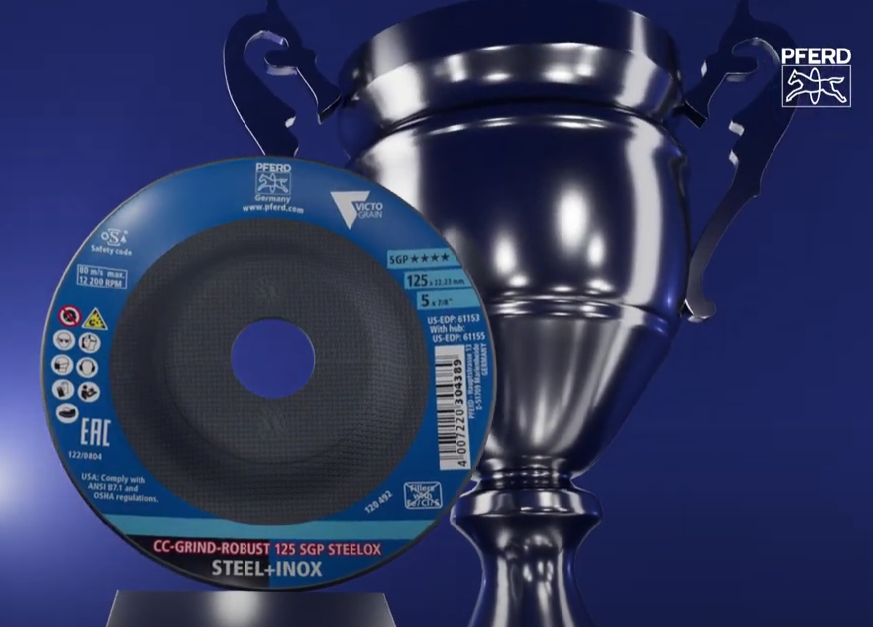
By Keith Brown
•
August 28, 2026
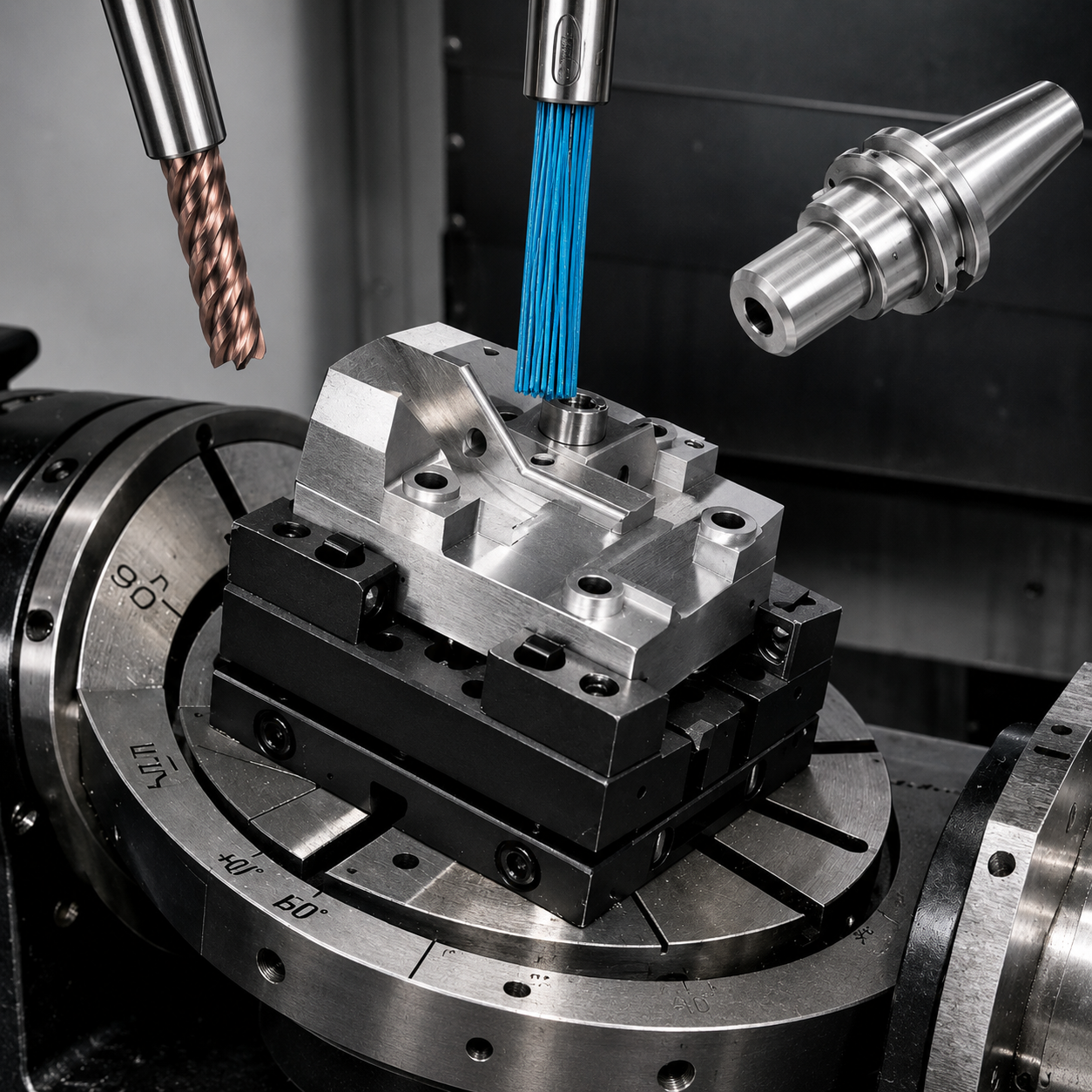
There is a cost in your process you are almost certainly not counting. It doesn't show up on any one tool's spec sheet. It lives in the gaps between tools — the runout a holder introduces before the cutter ever engages, the forty-five minutes a vise takes to re-indicate after a changeover, the hanging edge a deburring step leaves behind that reads as a reject under inspection. Each tool performs. The handoffs between them are where speed, tool life, and good parts quietly leak out of the process. A tooling stack assembled from independent purchasing decisions inherits every one of those gaps. When the tools are chosen to work together instead, the picture changes: less runout and less chatter at the spindle, so cutters hold up longer and leave cleaner edges — and the kind of coordinated setup that comparable systems have run faster and with less rework. The shops pulling ahead aren't running better individual tools. They're running coordinated systems. THE ECOSYSTEM OVERVIEW At Factory Link, we put together coordinated tooling systems that address the full production arc — not just the cut. The Rapid Mill Precision Ecosystem brings five represented brands into a single, deliberate workflow: 5th Axis for workholding, GS Tooling by Sowa for toolholding, PFERD TOOLS for material removal, ESS for surface conditioning, and INSIZE for optical verification. Each one is selected because it improves the performance of the next. BRAND DEEP DIVES 5th Axis V562X — The Foundation The V562X Self-Centering CNC Machine Vise is the first decision in the ecosystem because it determines the accuracy of every decision that follows. Built from heat-treated 4100 series steel, precision ground and hard milled, the V562X delivers repeatability better than ±0.0005" — part after part, setup after setup. The updated X-Series design adds a 4-bolt jaw mounting system that increases clamping force by 30% over the previous model while reducing jaw deflection. The result is 25 kN of clamping force at 75 Nm torque. As RockLock™-compatible Top Tooling, the V562X locks directly into the quick-change base system, eliminating the re-indicating ritual that costs shops thirty minutes every time a vise comes off the table. The compact footprint — 125.7mm x 152.4mm x 73.6mm — exposes five faces of the workpiece, giving the PFERD TOOLS cutter and the ESS brush full access without fixture interference. GS Tooling by Sowa CAT40 Holder — The Spindle Connection A vise that repeatable to ±0.0005" means nothing if the holder introduces runout at the spindle. The GS Tooling by Sowa Dual Contact CAT40 End Mill Holder CAT40 Holder addresses that directly. With TIR of 0.0002" OD to ID, it keeps the cutter running true. Factory balanced to 30,000 RPM and shipped with a calibration certificate, this holder is built for production shops that need documented performance, not assumptions. The 4-inch projection puts the PFERD TOOLS cutter at the reach required to access deep features or the bottom of parts held high in the V562X jaws — without the spindle nose encroaching on the workpiece or the fixture. Through coolant delivery is standard, with three coolant path options: through the spindle, through the DIN flange, and through the body. The holder does not perform, it enables — and in a coordinated system, that distinction matters. PFERD TOOLS HCD5M — The Engine PFERD TOOLS built the HCD5M for the materials that punish conventional end mills: austenitic stainless steel, duplex stainless, titanium alloys, and high-temperature materials that work-harden under the cutter if the geometry is wrong. The five-flute design with variable pitch and variable helix (38°) disrupts the rhythmic engagement frequencies that cause chatter, allowing higher feed rates in difficult materials without sacrificing tool life or surface quality. The chip divider geometry — a feature carried through the PFERD TOOLS SCT high-performance line — breaks chips into controlled lengths that clear reliably, even in deep pockets. The coating is matched specifically to titanium and titanium alloys, providing the thermal protection and lubricity these materials demand at high spindle speeds. Paired with the GS Tooling by Sowa holder's 0.0002" TIR, the HCD5M runs at the tolerances it was designed for — not at the tolerance it was designed for minus whatever the holder introduces. ESS Contact Brush — The Finisher Most deburring steps happen after the part leaves the machine: hand filing, tumbling, or nylon brush passes that fold burrs over rather than remove them. The ESS Contact™ Brush changes that equation. Ceramic abrasive filaments grind rather than flex — they maintain a consistent cutting geometry under tool pressure, allowing the deburring path to be programmed as a precision milling operation with repeatable coordinates. The brush is CNC and robot compatible, color-coded by material hardness to prevent misapplication. In the context of this ecosystem, the ESS brush matters most at the transition to inspection. The INSIZE profile projector uses high-contrast edge detection to measure part geometry. A hanging burr — even a small one folded flat by a nylon brush — reads as an irregular edge and can trigger a false rejection. The ceramic filaments of the ESS Contact™ Brush fracture burrs at the root, leaving a clean, sharp edge transition that the INSIZE optics can read accurately. INSIZE ISP-A5000E — The Gatekeeper The INSIZE ISP-A5000E High Precision Profile Projector closes the production loop with optical verification. The built-in edge detector and 10x standard magnification (upgradeable to 20x, 50x, or 100x) project part geometry onto a 300mm diameter screen for direct comparison against overlay charts or digital measurement. Stage resolution is 0.5µm across a 200x100mm X-Y travel range, with magnification accuracy of ±0.08%. Data outputs via USB to Excel and CAD software, giving shops a documented quality record for each batch. The ISP-A5000E is an offline unit — parts move directly from the machine to the glass stage. With ESS brush conditioning already complete, no manual washing or hand-filing is required before measurement. A clean part, a clean edge, and a clear optical system produce a reliable Go/No-Go decision rather than a judgment call. THE COMPOUNDING ADVANTAGE None of these tools is doing something impossible on its own. What changes in a coordinated system is the accumulation of precision at each handoff rather than the accumulation of error. The V562X eliminates re-indicating time and holds the part rigid. The GS Tooling by Sowa holder delivers the cutter to the spindle with documented runout. PFERD TOOLS removes material without chatter in the materials that cause the most rework. ESS removes the burr without moving the part or leaving debris that confuses the inspection step. INSIZE reads the result accurately because the edge it is reading is clean. The outcome is a production arc where each step reinforces the next. Fewer interruptions. Less rework. Inspection results that mean something. THE FACTORY LINK DIFFERENCE Factory Link represents all five of these brands — not as a coincidence of the rep agreement, but because the full production arc matters to the shops we work with. A workholding company, a toolholding company, a cutting tool company, a surface conditioning company, and a metrology company don't often find themselves in the same conversation. At Factory Link, that conversation is the point. That's the point of building the whole arc rather than selling five parts: a system coordinated to cut cleaner for longer, with less runout, less chatter, and less rework leaking out at the handoffs. Whether you're looking at one piece of it or the whole stack, contact us at [website URL] to talk through your application.